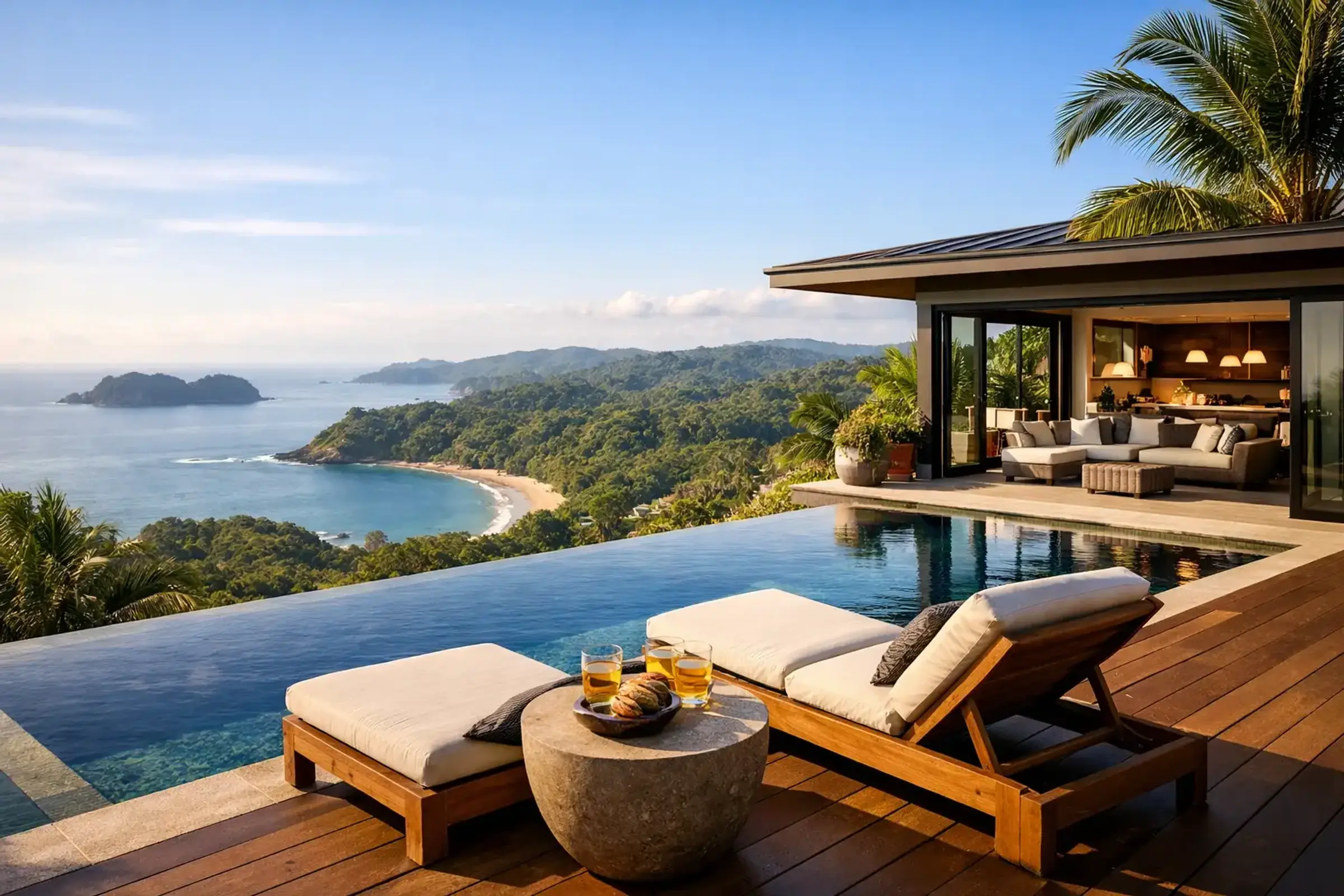
Costa Rica luxury real estate pairs coastal privacy, architectural distinction, and lasting lifestyle value for discerning buyers focused on Guanacaste with care.
A residence in Guanacaste is rarely chosen for square footage alone. It is chosen for the quiet arrival at a gated hillside estate, the measured horizon of the Pacific, and the freedom to gather family without compromising privacy. Costa Rica luxury real estate at its finest is a personal sanctuary, but it can also become a lasting expression of stewardship, taste, and multigenerational intention.
For discerning American buyers, that distinction matters. The most compelling properties are not simply beautiful homes in a warm climate. They are rare holdings in locations where topography, access, architecture, and long-term desirability meet. In a market with extraordinary natural beauty, true scarcity is created by the details that cannot be replicated.
What Gives Costa Rica Luxury Real Estate Its Enduring Appeal
Guanacaste offers an unusually complete proposition for a second home or legacy residence. International access through Liberia provides a practical connection to major U.S. cities, while the region's coastline, dry-season climate, and sophisticated hospitality infrastructure preserve the feeling of a genuine retreat. A buyer can arrive for a long weekend, yet remain connected to the people and pursuits that shape everyday life.
The appeal becomes more nuanced at the upper end of the market. A premier estate may deliver a dramatic ocean view, but the finest examples also provide an approach that feels private, a setting protected from future visual interruption, gracious indoor-outdoor living, and a design language that belongs to its landscape. Mature landscaping, thoughtful shade, covered terraces, guest accommodations, and an effortless relationship to the water often matter more over time than a dramatic first impression.
This is why comparable sales alone cannot fully explain value. Two homes with similar bedroom counts and apparent proximity to the coast can offer entirely different ownership experiences. One may sit in a distinguished, carefully managed community with enduring architectural standards. Another may have less certain access, a more exposed setting, or a view corridor that deserves closer examination. Luxury is not only a category. It is the cumulative quality of decisions surrounding the property.
Guanacaste Is a Collection of Distinct Markets
Buyers sometimes speak of Guanacaste as though it were one destination. In practice, it is a collection of coastal enclaves, each with its own rhythm, inventory profile, and definition of prestige.
The Papagayo Peninsula is recognized for privacy, resort-caliber services, and a highly curated ownership environment. It appeals to buyers seeking an established international standard, refined amenities, and residences designed around exceptional Pacific views. Inventory is inherently limited, and opportunities can change hands quietly before reaching a broad audience.
Las Catalinas offers a more walkable, design-forward experience, where architectural character and community life are central to the appeal. It can suit families and buyers who value a polished village atmosphere, easy access to beach and trails, and a home that feels connected to a social setting without being dependent on a conventional resort model.
Tamarindo and nearby beach communities bring a more energetic coastal lifestyle, with dining, surf culture, and broad appeal for owners who expect regular guests or may consider selective rental use. Nearby hillside and beachfront pockets can provide substantial privacy, though each must be evaluated on its own terms. The right choice depends on whether the priority is complete seclusion, a lock-and-leave residence, an active family base, or a property with a more flexible hospitality dimension.
The best location is not necessarily the most recognized one. It is the setting that aligns with how the residence will be used ten years from now.
The Difference Between a Fine Home and a Legacy Property
A legacy property has permanence beyond its finishes. It occupies a position that is difficult to replace, and it is composed with enough restraint to remain compelling as tastes evolve. This may mean a beachfront parcel with genuine privacy, an elevated estate with protected sunset views, or a residence within a community where land use and design standards support long-term value.
Architecture matters, particularly in the tropics. The most successful homes are not merely imported concepts placed beside the ocean. They understand sun orientation, seasonal rain, ventilation, materials, maintenance, and the transition between interior comfort and exterior living. Deep overhangs, shaded courtyards, natural stone, durable hardwoods, and well-considered water management are practical decisions with aesthetic consequences.
There is also a human dimension. An estate that accommodates grandparents, adult children, and close friends without sacrificing intimacy has a different kind of value. Separate guest suites, a private casita, generous terraces, and spaces designed for shared meals can turn a vacation residence into a place that holds family rituals. For many buyers, that is the real return.
Discretion Changes the Search
At the premier level, a public listing feed is only one part of the market. Some owners prefer to protect their privacy, avoid casual inquiries, or test interest through trusted relationships before formally offering a property. As a result, notable opportunities may be introduced through private conversations rather than conventional marketing.
That access should be handled with discipline. Off-market does not automatically mean better, and a discreet offering still deserves the same careful review as any visible listing. The advantage is not mystery. It is the ability to consider a wider field of genuinely relevant properties, including those that fit a buyer's preferences for location, design, privacy, and timing.
A curated advisory relationship also reduces noise. Rather than reviewing dozens of homes that are technically within a budget, a buyer can focus on the few that merit a private viewing and serious consideration. Costa Rica Livin approaches this process as a matter of selection and fit, pairing exceptional market access with individualized attention to the ownership experience each client intends to create.
Buying Well Means Looking Beyond the View
Foreign buyers can generally own Costa Rican real estate, and many acquisitions are structured through a Costa Rican legal entity. Yet a sophisticated purchase requires more than understanding the broad ownership principle. The title history, survey, property boundaries, access, zoning, concession status where applicable, condominium regime, homeowners association obligations, utility capacity, and construction permits all deserve qualified review.
Coastal property requires particular care. The distinction between titled land and land subject to the Maritime Zone is material, as are rights of access and the legal status of improvements. A beautiful beachfront setting can be entirely appropriate, but it should be assessed by experienced Costa Rican legal and technical professionals before a buyer forms conclusions about use, control, or future plans.
Operational realities should also be considered early. Who will oversee the residence when it is unoccupied? How are landscaping, pool care, security, hurricane-season preparation, and staff managed? Is the home intended for private enjoyment only, or will it be rented at selected times? Rental income can support ownership costs in some locations, but it introduces licensing, management, wear, and guest-experience considerations. It should be a deliberate strategy, not an assumption attached to a purchase.
A More Considered Path to Ownership
The most rewarding acquisition process begins before the first viewing. Clarifying the desired rhythm of ownership helps define the search: frequent short escapes or extended seasonal stays; quiet family privacy or access to a social community; a newly built contemporary residence or an established estate with mature grounds and character.
Private viewings then become more useful when they are unhurried. Visit at different times of day when possible. Listen for road noise, observe the wind, assess the drive from the airport, and imagine the home in green season as well as dry season. A property that feels spectacular at sunset should also function beautifully on an ordinary morning when children are arriving, staff are working, and the household is simply living.
Once a suitable residence is identified, the transaction should be supported by an experienced team that can coordinate legal, tax, technical, insurance, and operational considerations. White-glove service is not about removing thoughtful questions. It is about ensuring the right questions are addressed with clarity, discretion, and professional integrity.
The property worth holding is the one that continues to feel specific after the first visit: a place where the setting, architecture, and life you envision are in rare alignment. In Guanacaste, that kind of ownership is not simply a change of address. It is a place from which a family story can be lived, hosted, and carried forward.
Continue reading
Peninsula Papagayo Property Guide for Buyers
A Peninsula Papagayo property guide for discerning buyers, covering ownership, locations, access, and the considerations behind a Costa Rican estate.
How Is Medical Care in Costa Rica for Families?
How is medical care in Costa Rica? A discerning buyer’s guide to private hospitals, insurance, emergency access, and the realities of life in Guanacaste.
Can Foreigners Buy Beachfront Property in Costa Rica?
Can foreigners buy beachfront property in Costa Rica? Learn ownership rights, concession-zone limits, and the due diligence luxury buyers need before purchase.