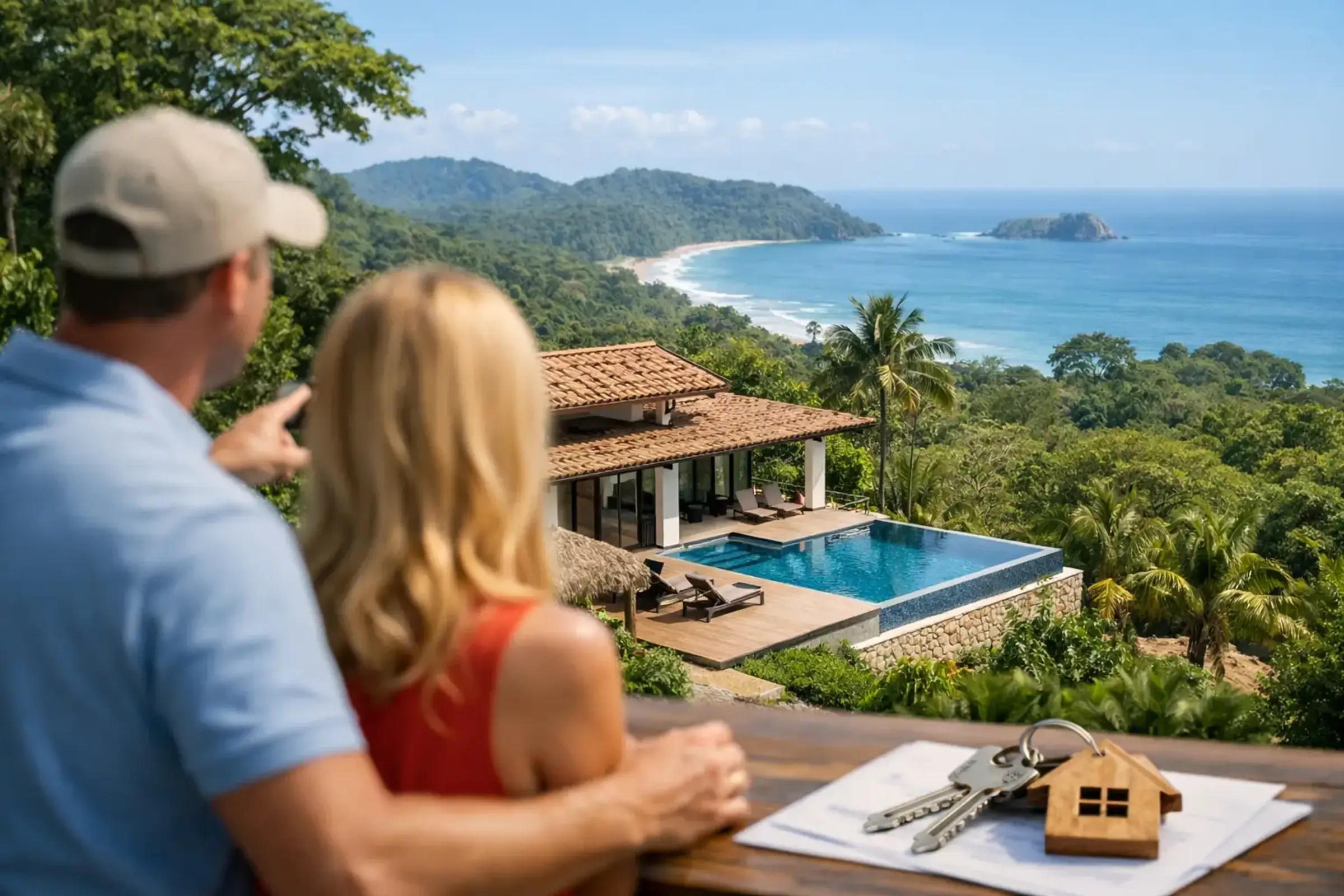
Can Americans buy property in Costa Rica? Learn ownership rights, concession rules, due diligence, and a refined path to a Guanacaste estate now.
A home in Guanacaste can be more than a second address. For many American families, it is a setting for long lunches after the surf, a private retreat between demanding seasons of work, and a lasting expression of what comes next. So, can Americans buy property in Costa Rica? Yes. Costa Rica generally grants foreign buyers the same property ownership rights as Costa Rican citizens, allowing Americans to acquire and hold titled real estate in their own name or through a Costa Rican entity.
That openness is one reason the country remains so compelling for discerning international buyers. Yet an exceptional acquisition requires more than a favorable answer. Title structure, coastal restrictions, property access, water, building controls, tax exposure, and the quality of the professional team all deserve the same disciplined attention one would bring to a premier estate anywhere in the world.
Can Americans Buy Property in Costa Rica With Full Ownership?
In most of Costa Rica, the answer is yes. An American may purchase fee-simple property, meaning a registered ownership interest in land and improvements that can be sold, inherited, leased, or held for the long term. There is no general residency or citizenship requirement to buy a home, condominium, parcel, or estate.
For a buyer seeking a villa above Playa Hermosa, a hillside residence near Las Catalinas, or a private estate within the Papagayo region, this is the central legal principle: properly titled property can be owned by a foreign national on substantially the same basis as it can by a Costa Rican national.
The distinction lies in the words "properly titled." Costa Rica has a formal national registry, but sophisticated due diligence remains essential. A beautiful view and polished architecture do not, by themselves, confirm that boundaries, easements, utilities, zoning, and prior transfers are in order. In luxury real estate, the details are not administrative afterthoughts. They protect the permanence of the lifestyle and legacy being acquired.
The Coastal Concession Question
The most significant exception involves portions of Costa Rica's maritime zone, the first 200 meters measured inland from the ordinary high-tide line. This area is governed differently from ordinary private property.
The first 50 meters are generally public zone and cannot be privately owned. The next 150 meters are commonly known as the restricted zone. Rather than fee-simple ownership, qualifying parties may hold a municipal concession, subject to approval, regulation, and renewal requirements.
Foreign ownership restrictions can apply to concession rights. As a general rule, a concession entity must have at least 51% Costa Rican ownership when foreign ownership exceeds the permitted level. The precise analysis depends on the property, its legal history, the applicable municipality, and the proposed ownership structure. It should never be treated as a standard residential closing.
This does not mean coastal opportunities are off limits to American buyers. It means the asset must be understood for what it is. Some of Guanacaste's most remarkable settings are found near the sea, but the ownership instrument, development limitations, and concession term may differ materially from an inland or fully titled residence. A qualified Costa Rican real estate attorney should verify the status before a buyer commits capital or falls in love with an address.
Buying Individually or Through a Costa Rican Entity
Americans may take title personally, and for certain purchases this can be the cleanest approach. Others choose a Costa Rican corporation or limited-liability entity to hold the property, particularly when acquiring with family members, planning for succession, or creating a defined ownership framework for a legacy residence.
An entity can provide flexibility, but it is not a decorative layer to add automatically. It carries annual compliance responsibilities, including beneficial ownership reporting and corporate tax obligations. The right structure depends on the buyer's estate plan, family governance, liability preferences, future rental intentions, and advice from both Costa Rican and US tax professionals.
For a multigenerational home, the question is often not simply who will hold title on closing day. It is how the estate should pass, be used, and be cared for decades from now. Thoughtful planning at acquisition can prevent avoidable complexity later.
The Acquisition Process for a Guanacaste Estate
The purchase process can move efficiently when preparation is deliberate. A buyer usually begins by defining the purpose of ownership: a private seasonal retreat, an income-producing residence, a family compound, or an asset intended to remain in the family. That purpose informs location, community selection, operating costs, and the degree of privacy required.
Once a property has been selected, the parties typically execute an offer or purchase agreement that addresses price, deposit, due diligence, contingencies, closing date, and the handling of any furnishings or inventory. The buyer's attorney then conducts legal and technical review. This should include a registry search, review of the cadastral plan, confirmation of liens and encumbrances, municipal tax status, corporate records where relevant, and a clear assessment of access and easement rights.
For an estate or development parcel, the review should go further. Water availability can determine both daily enjoyment and future expansion. Building permits, environmental considerations, drainage, road maintenance, homeowners' association rules, and rental regulations may all influence value. A residence that feels wonderfully secluded should still have documented, reliable legal access.
Closing is typically completed before a Costa Rican notary public, who is also an attorney and is responsible for formalizing the deed and registering the transfer. Funds are commonly managed through an appropriate escrow arrangement while legal conditions are satisfied. After execution, the deed is submitted to the National Registry. Registration is the final act that confirms the buyer's recorded ownership.
Costs, Taxes, and the Real Cost of Stewardship
Costa Rica is often viewed as relatively favorable from a property-tax perspective. Annual municipal property tax is generally 0.25% of the declared value, though a luxury home may also trigger a separate luxury-home tax depending on its assessed construction value and current thresholds. Owners should also plan for homeowners' association fees, insurance, private security, landscaping, pool care, reserve funds, and professional property management if the residence will be vacant for part of the year.
Closing costs vary with the transaction and structure, but buyers should budget for transfer tax, registration charges, legal fees, notary fees, and escrow-related costs. A clear estimate before signing is more valuable than a low headline number that later grows through omissions.
Rental income introduces another layer of considerations. A home that is occasionally rented can offset carrying costs, but it also changes the operational profile of the asset. Licensing, tax obligations, staffing, guest experience, community rules, and wear on finishes should be evaluated honestly. Not every exceptional private residence is best treated as a rental property. Privacy and preservation may carry greater value.
US citizens also remain subject to US tax and reporting obligations. Foreign bank accounts, entity ownership, rental income, gifts, inheritance planning, and future sale proceeds can have consequences on both sides of the border. Costa Rican counsel and a US-based international tax advisor should work from the same understanding of the ownership plan.
Why Curation Matters More Than Inventory
Guanacaste offers a wide range of residences, from turnkey condominium living to architecturally significant estates with expansive land and commanding Pacific views. The most compelling opportunities are not always the most visible. Some are privately held, quietly offered, or best evaluated through relationships with experienced local professionals rather than through broad listing portals.
That is especially true when the objective is distinction rather than mere square footage. A premier property earns its place through its setting, architectural integrity, approach to privacy, quality of stewardship, and enduring appeal when market cycles shift. The right home should feel personal while remaining legible as a disciplined real estate decision.
Costa Rica Livin approaches this process as a private advisory relationship, connecting qualified buyers with carefully considered opportunities and the professional expertise required to evaluate them with confidence. Private viewings, measured market context, and access to the right specialists allow the search to remain focused on what truly belongs in a family's portfolio.
Costa Rica welcomes American ownership, but the finest purchases are not made by rushing toward the view. They are made by choosing a property whose title, setting, and stewardship are worthy of the life you intend to build there.
Continue reading
Peninsula Papagayo Property Guide for Buyers
A Peninsula Papagayo property guide for discerning buyers, covering ownership, locations, access, and the considerations behind a Costa Rican estate.
How Is Medical Care in Costa Rica for Families?
How is medical care in Costa Rica? A discerning buyer’s guide to private hospitals, insurance, emergency access, and the realities of life in Guanacaste.
Can Foreigners Buy Beachfront Property in Costa Rica?
Can foreigners buy beachfront property in Costa Rica? Learn ownership rights, concession-zone limits, and the due diligence luxury buyers need before purchase.